Frankenstein
by Nick Dear
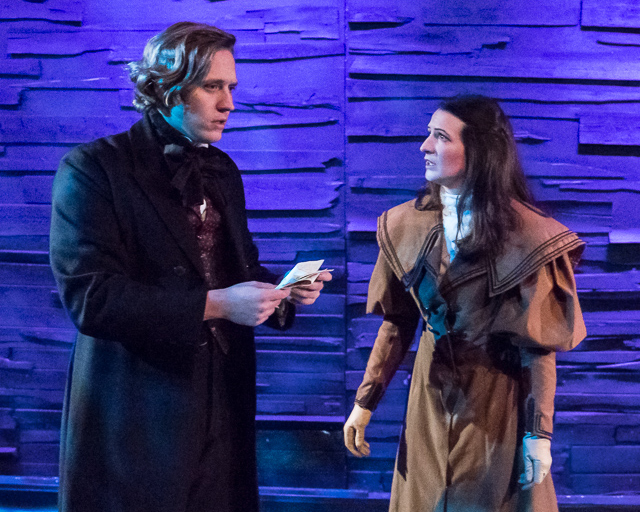
In 2017, I directed a production of Nick Dear’s Frankenstein at Theatre Technis in Camden on behalf of Tower Theatre.
About Frankenstein by Nick Dear
Nick Dear’s adaptation follows the source material closely, but shifts the perspective.
The play initially follows the Creature’s journey, detailing his awakening, his struggle to understand what he is, and the world’s brutal reaction to him. It then turns to Victor Frankenstein and the psychological cost of what he has made.
The two threads converge in a final confrontation that binds them together in something darker than either could escape alone.
Reasons for Choosing the Play
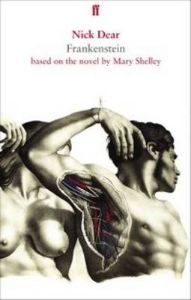
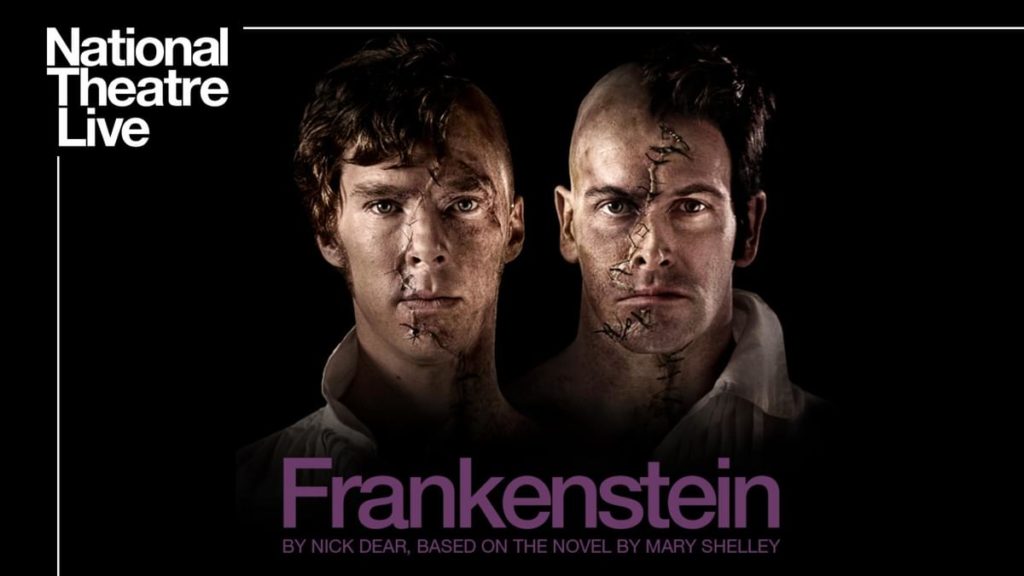
During my MA I had studied the adaptation of Gothic novels for the stage and the ways a change of medium transforms the telling of a story. Frankenstein was central to that research. I traced the play’s history from its earliest stage adaptation, where Igor first appeared, through to Nick Dear’s version, first directed by Danny Boyle in 2011.
The story had drawn me long before that. Victor and the Creature are one of literature’s great doubled protagonists: two figures whose fates mirror and destroy each other.
When the opportunity came to propose a production, having worked my way up from stage manager to assistant director on a recent production of Faust, Frankenstein felt like the natural choice. The timing added another dimension: 2017 marked 200 years since Mary Shelley’s novel was first published.
My Vision
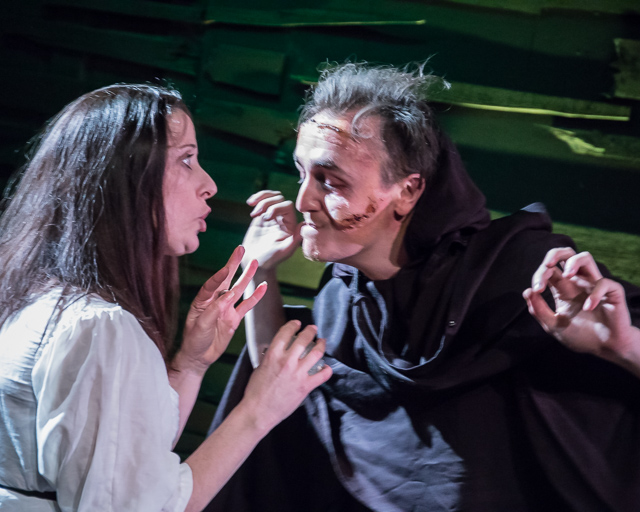
The Danny Boyle production was more sexualised in places. With our actor bringing a naturally childlike quality to the role, it felt more fitting to explore the Creature as an innocent: someone newly born into the world and trying to understand it.
Moments that Boyle’s production had treated with a sexual charge became, in our version, expressions of curiosity: the Creature approaching the sex worker, for instance, read less as desire and more as wonder. This felt truer to our actor and gave the production its own distinct identity.
Though the show was technically ambitious: a cast and crew of fifteen each, my central aim was always the characters and their relationships. I wanted those relationships to carry the story, even if everything else were stripped away.
Research
I was fortunate enough to see the Danny Boyle production at the National Theatre, with Benedict Cumberbatch as Victor and Jonny Lee Miller as the Creature. Its pace struck me immediately: propulsive, cinematic, closer to film than traditional theatre, as did the boldness of the set design, an approach Boyle would later bring to the London Olympics opening ceremony.
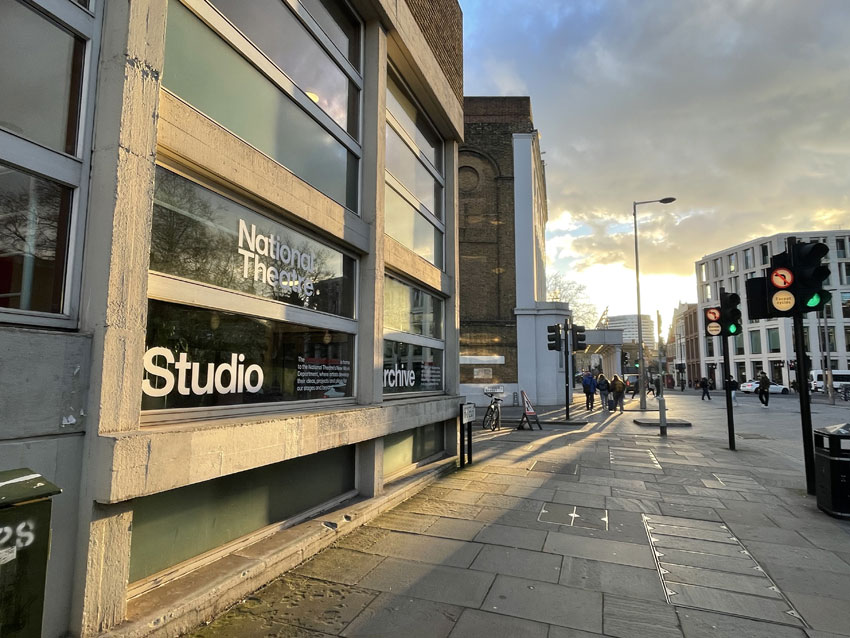
I also made use of the National Theatre Archive to research the production further, accessing recordings, scripts, and rehearsal materials that informed my own approach. I would advise anyone interested in theatre to spend time here looking through their records.
Staging
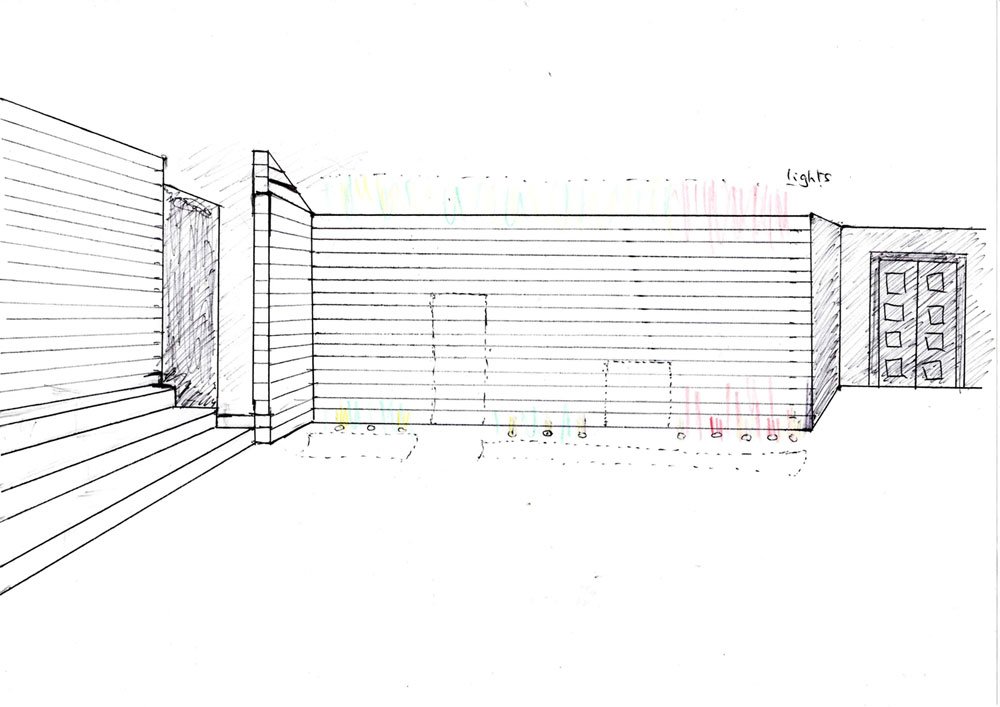
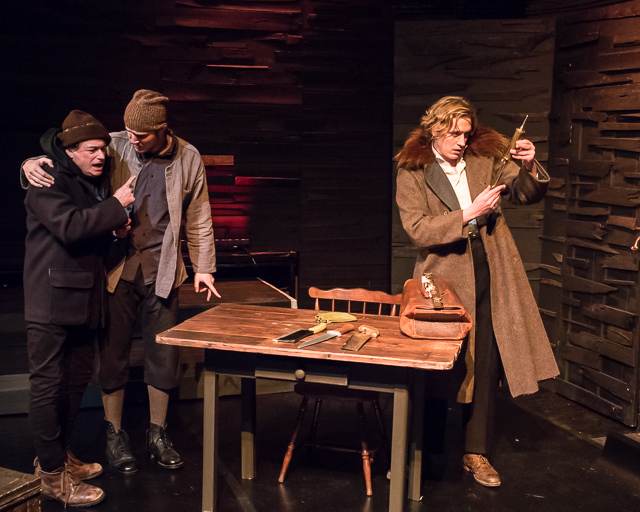
The script moves at pace, shifting rapidly between locations: woods, waterfront, interior, ice field. To serve this, I chose a minimal set, using lighting and sound to conjure each new environment rather than building it physically.
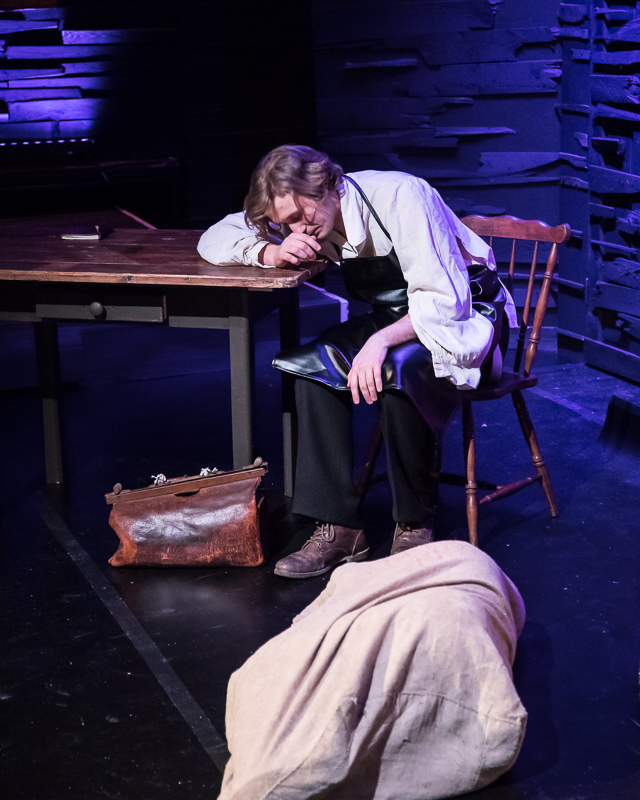
The approach had a conceptual logic too: just as the Creature is assembled from repurposed parts, so were the props with objects reused and recontextualised across scenes to suggest different times and places.
Sound and Music
The soundscape drew on one of the play’s central tensions of the natural versus the industrial. A mix of organic and mechanical sounds underscored this throughout, while the music itself reflected the contrasting natures of Frankenstein and the Creature.
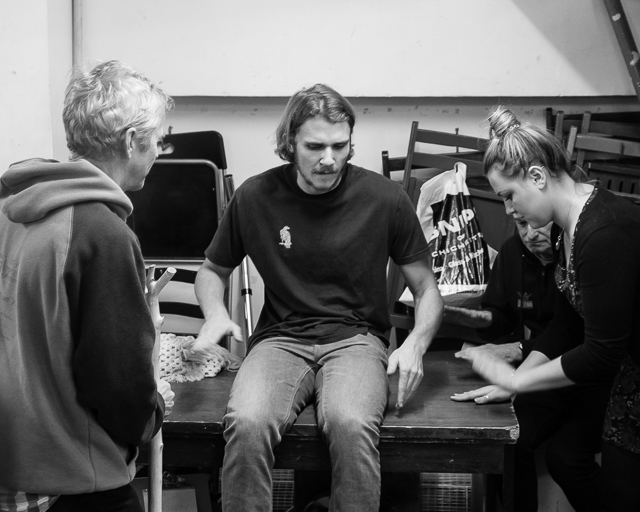
In keeping with the production’s ethos of making everything visible, I worked with sound director Colin Guthrie to incorporate live drumming as the backbone of the score. Colin taught the ensemble to play using parts of the set and props as instruments, creating a sound that was raw, percussive, and entirely our own.
Lighting
I wanted the production to carry a distinctly Gothic atmosphere, drawing on the rich visual language of filmmakers like Guillermo del Toro and Mario Bava, whose use of colour and shadow transforms space into something heightened and strange.
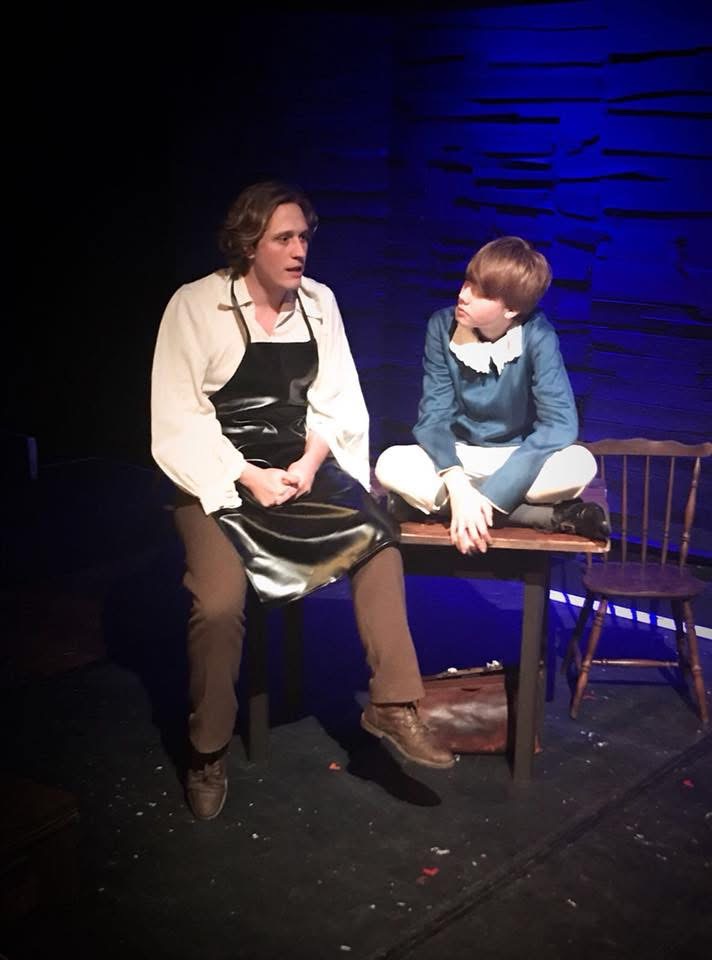
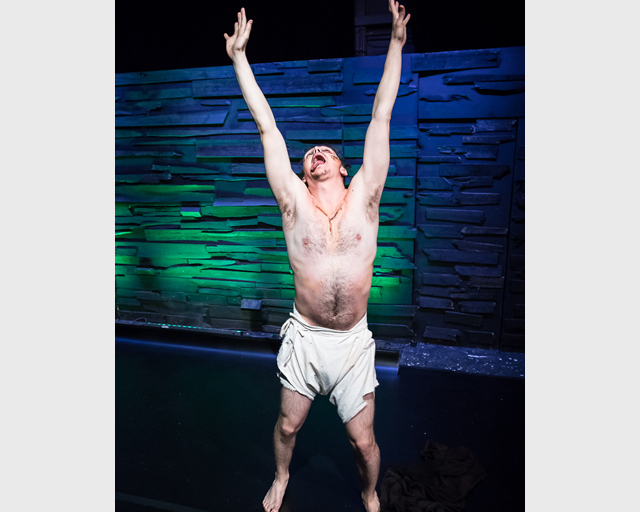
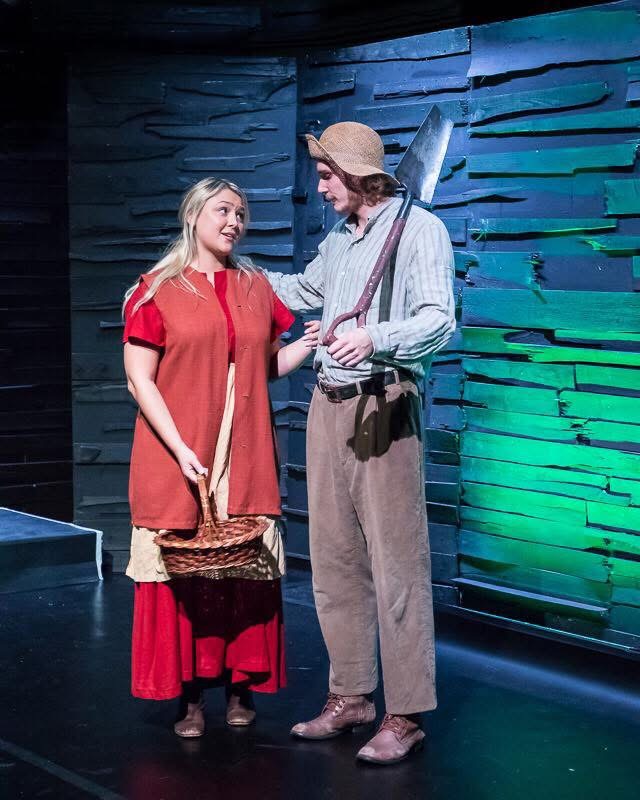
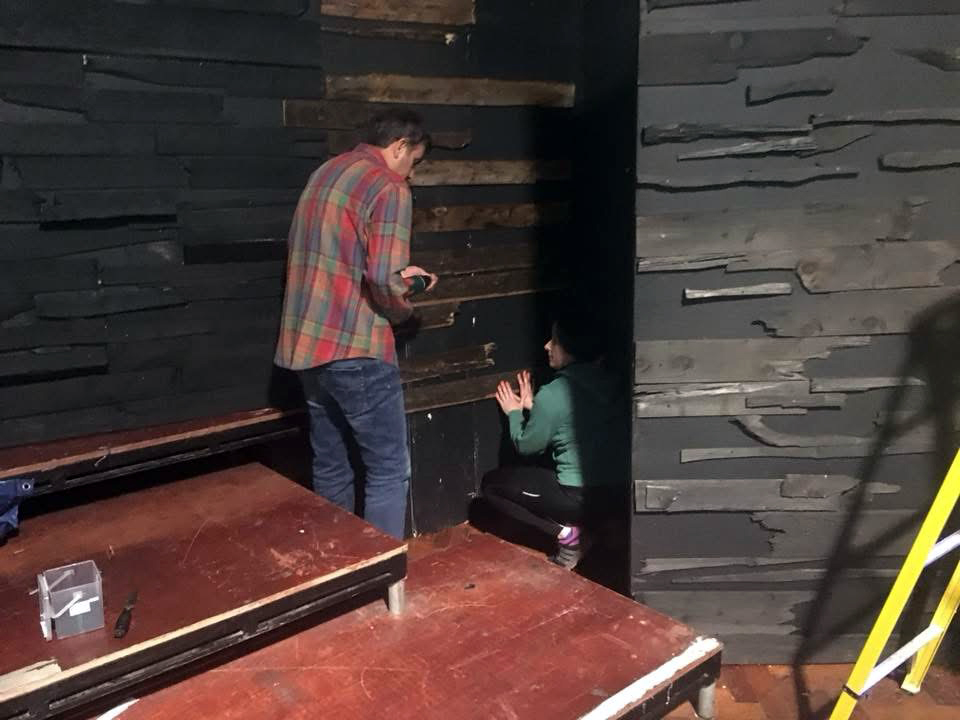
Working with lighting designer Stephen Ley and set designer Jude Chalk, we created a textured backdrop of painted wood that responded to coloured light, allowing distinct zones and atmospheres to emerge from a single surface. Lighting, working alongside sound and costume, carried the audience through each shift in climate, time of day, and mood.
Monster Workshop
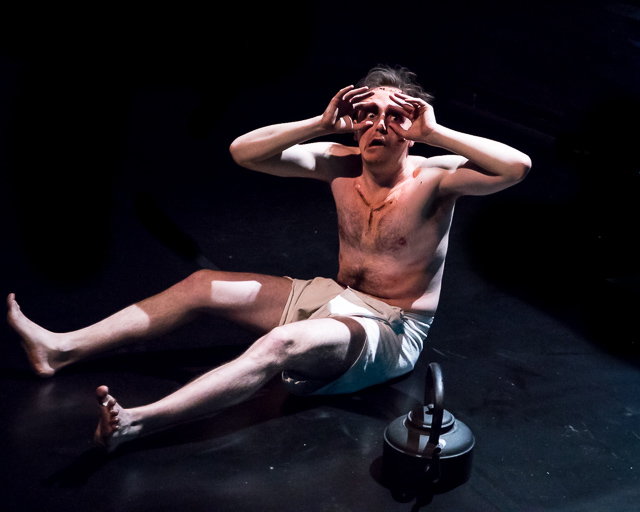
Early in the process, I brought together the key creative collaborators: movement director Lindsay Royan, voice coach Julia Collier, and costume designer Kathleen Morrison, for a dedicated workshop focused entirely on the Creature.
Rather than developing voice, movement, and costume separately, we worked on them together, so that each element could inform the others.
Voice
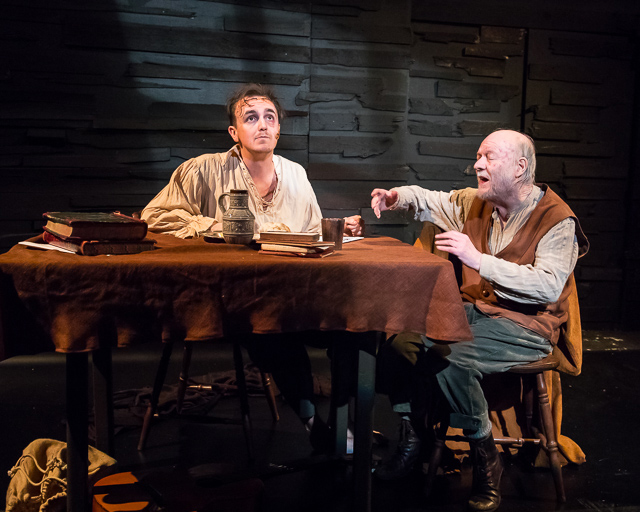
The Creature learns to speak over the course of the play, and for much of it still struggles. We aimed his speech to be something like a child acquiring language, or a person relearning speech after a stroke. Getting this right was a priority; handled badly, it risks feeling insensitive or unintentionally comic.
Working with Julia Collier, we approached it with care and specificity.
Costumes and Makeup
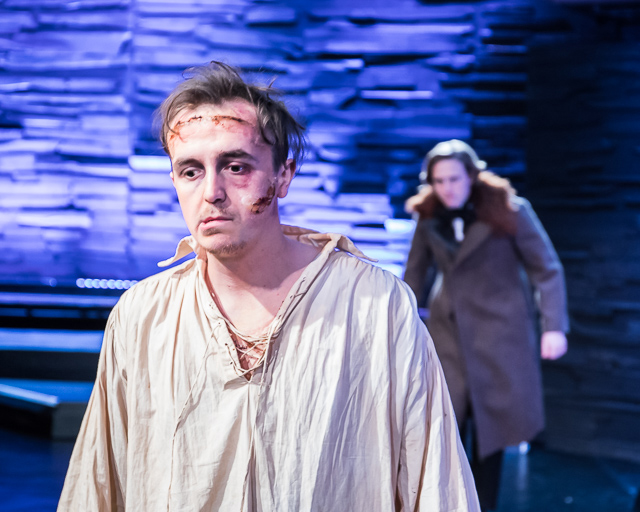
The production was costumed in period (1818) grounding the Creature’s story in Shelley’s original world. For the Creature’s makeup, I worked with makeup artist Claire Henshaw, drawing on the same physical concept: the idea that parts of his face and body might have limited mobility, echoing the experience of someone who has had a stroke.
Expert Assistance
I was assisted by Katie Smith, recommended by my stage manager Stephen Bracher. Katie brought an acting background to the role, which proved particularly valuable in areas where I was still developing my practice, such as detailed blocking and actor positioning among them.
It was the beginning of a strong working relationship, and we have since collaborated on a number of productions as director and assistant director.
Performance
The production sold out, the first Tower Theatre production to do so at Theatro Technis, with the theatre admitting an additional 10% beyond capacity from the waiting list. Reviews were strongly positive, and every actor expressed a desire to work with me again; several have since done so.
Following the run, the theatre owner invited me to join the Artistic Forum. I went on to build a lasting relationship with the venue, becoming involved in a number of subsequent productions and finding a genuine welcome within the Greek community around the theatre.
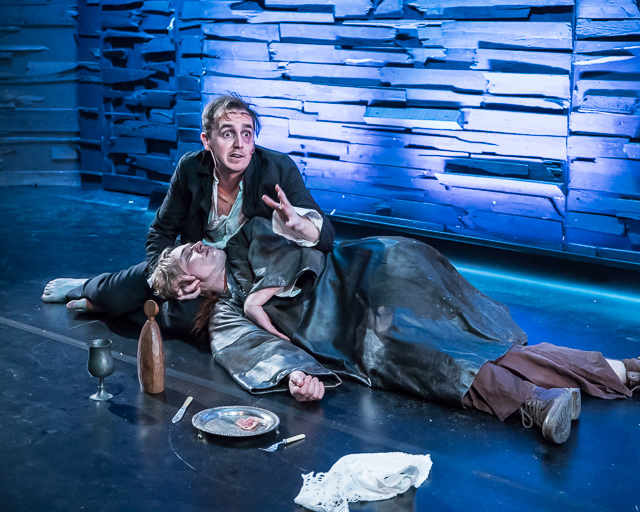
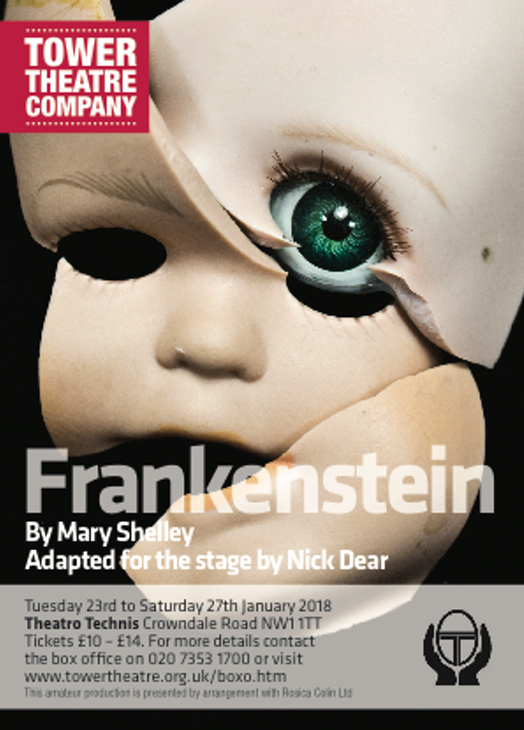
Frankenstein by Nick Dear
Cast and Crew
Victor Frankenstein : Daniel Draper
The Creature : David Hepburn
Elizabeth Lavenza : Lucy Acfield
M Frankenstein : Matthew Vickers
William Frankenstein : Charles Barakat
Clarice : Rachel Berg
De Lacey : Peter Novis
Felix : Aron von Andrian
Agatha : Ayla Mammadova
The Female Creature : Milica Guceva
Ewan : Richard Pedersen
Rab : Aron von Andrian
Gustav : Richard Pedersen
Klaus : Ken Thomson
Servants : Ken Thomson, Tunde Hall
Constable : Stephen Brasher
Ensemble/Housemaid : Lenia Korma
Director: Karen Sheard
Assistant Director: Katie Smith
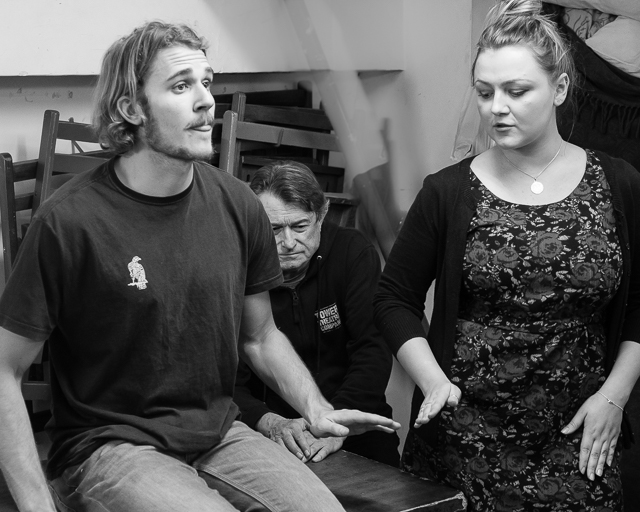
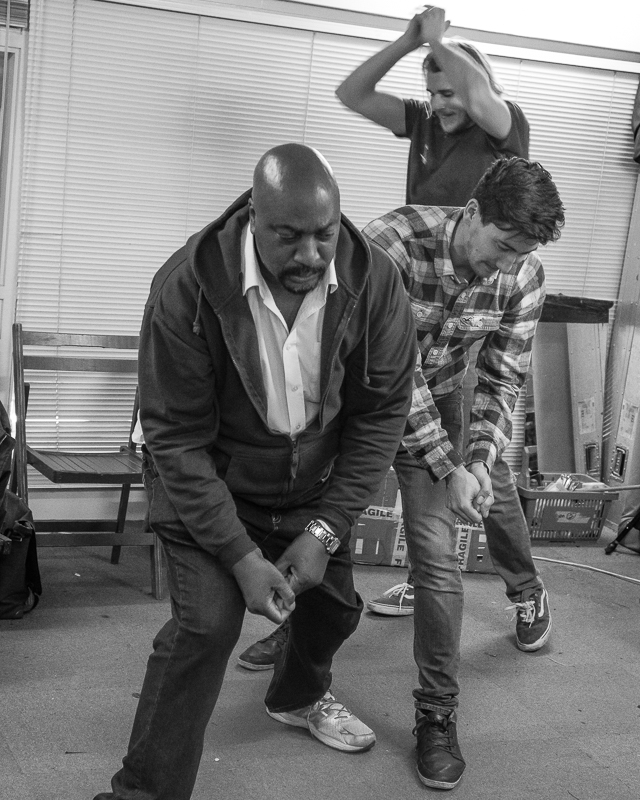
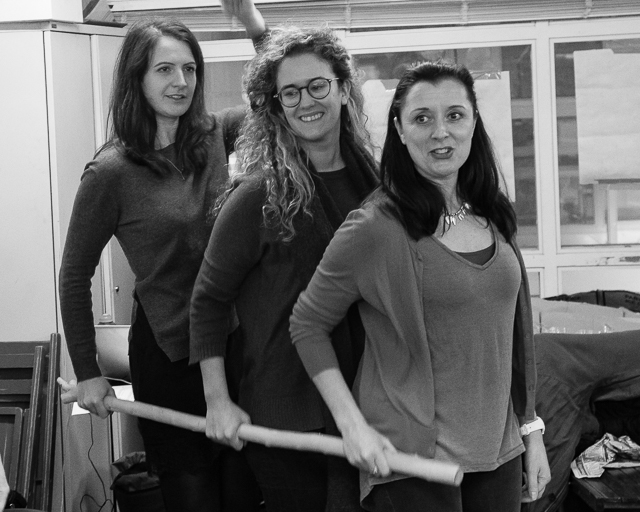
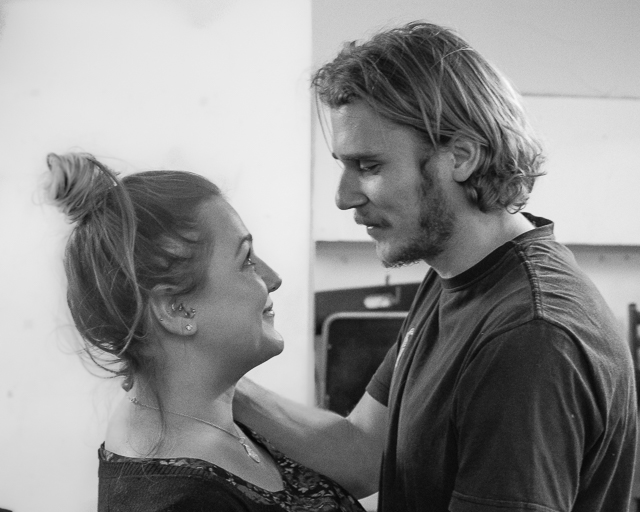
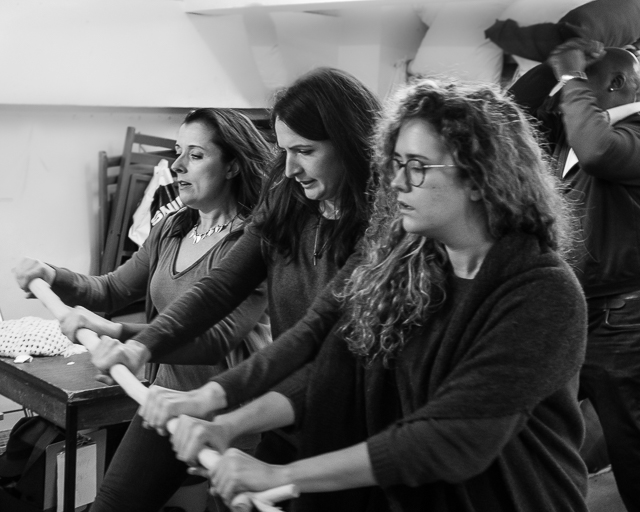
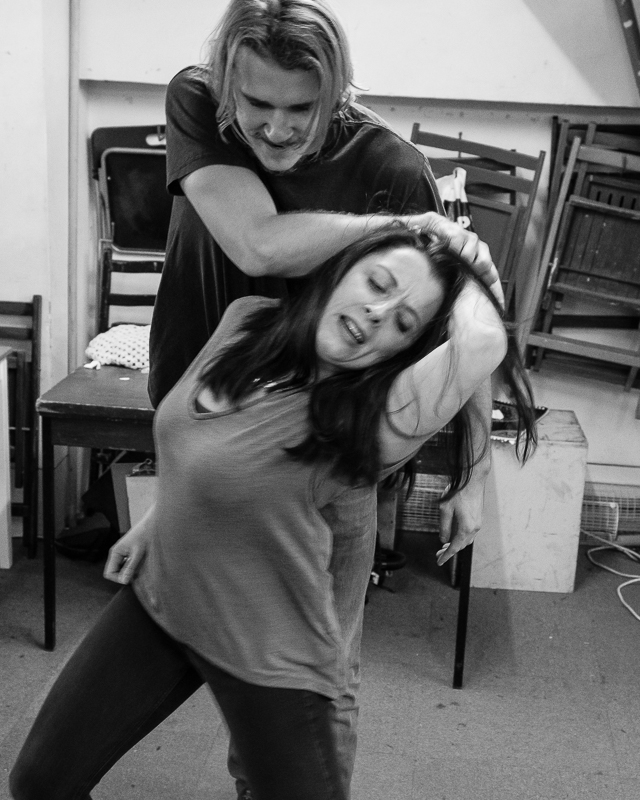
Photos of Frankenstein by Nick Dear in Rehearsal
Photos of Frankenstein in Performance