Educating Rita
by Willy Russell
In September 2025 I directed a production of Willy Russell’s Educating Rita at Network Theatre in Waterloo, London.
About ‘Educating Rita’
Educating Rita is a witty two-hander that deals with jaded literature tutor Frank, whose life is revived when adult education pupil Rita busts through his door, determined to turn her life around and become an educated woman. The resulting friendship brings upheaval to both of their lives.
Though separated by class and background, Rita and Frank share something deeper. They both have a hunger for meaning, and a romantic view of lives lived on the other side of the grass.
Set in the 1980s, the story captures a pivotal cultural moment when access to education began to widen, and women like Rita dared to defy expectations and reshape their futures.
Reasons for Choosing the Play
I had analysed the play while studying playwriting under April D’Angeles. The play acts as a brilliant example of how different types of speech and language can work to convey character. This covered areas such as the dialogue, idiolect, dialect, and different parts of speech. I created a dramaturgical report about the use of dialogue in Educating Rita if you want to find out more..
From my studies of the play, I realised just how clever and witty the script was, and had thought for a while that it would be a great challenge to direct the play.
When looking to propose a play for the Network Theatre I found out that it was the 45th anniversary of Educating Rita’s first performance and so a great time to put this plan into action.
My Vision
My focus with Educating Rita was on how language is used to create wit and how the two characters who were from different backgrounds manage to connect over their love of learning.
This version of the play aimed to blend music and clothes from the era with spoken and written quotes from the literary works discussed in the play, offering fresh insight into the texts that shape their conversations.
I wanted to make this very much a nostalgia piece and lean into the clothes and attitudes at the time. I also wanted to reflect on how things have changed, in regards to women and education, such as the attitudes towards women choosing to educate themselves over raising a family.
Research
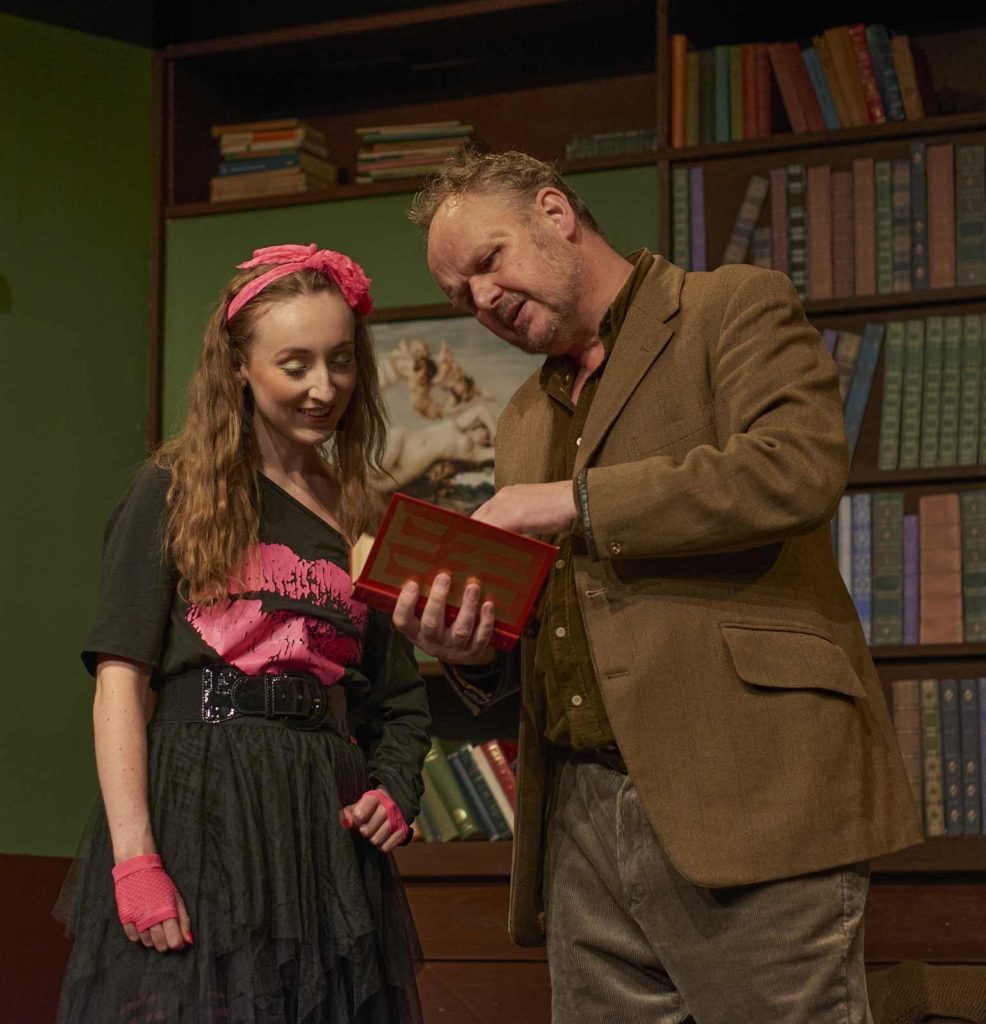
Through my research into the time of the play and Willy Russell I felt that the booklined study was based on the St Katharine’s College that Russell attended as the architecture of the room matched perfectly.
I also felt that the University she went to in London would have been the University of London, from the descriptions given. We used this in our rehearsals to help the actors imagine the wider world of the play.
We also analysed the clothes worn in places around Liverpool at the time to get a feel for the environment they were in. Looking at the spacing between each scene.
I worked out what season it would be in each scene, and included lighting and clothing to match the time of year and likely weather for each time jump.
Casting
I found that casting this show was both easy and difficult. Easy in that I found two actors who were made for the roles, difficult in that we got a lot of interest from brilliant actors who were too young or just not right for this particular role.
I’m always open to seeing different interpretations of parts from actors who have their own visions, but on this occasion the more traditional readings were the stronger.
I cast a Manchester actor rather than Liverpudlian for the role. Russell has said himself he never stated Rita’s accent as anything other than ‘Northern’.
Staging
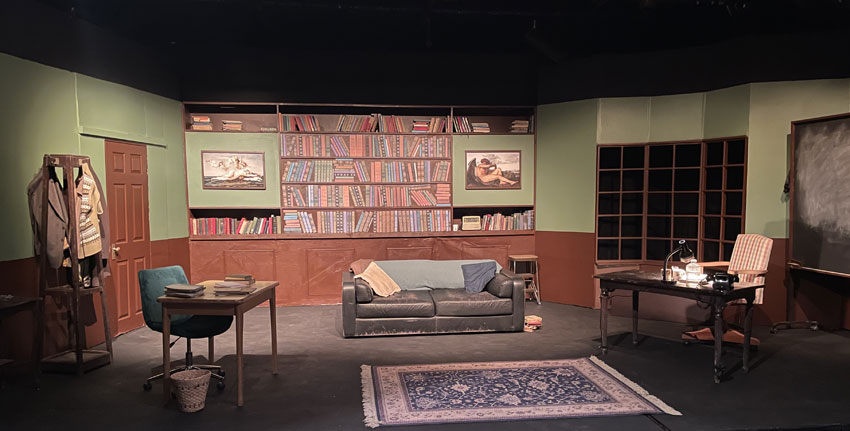
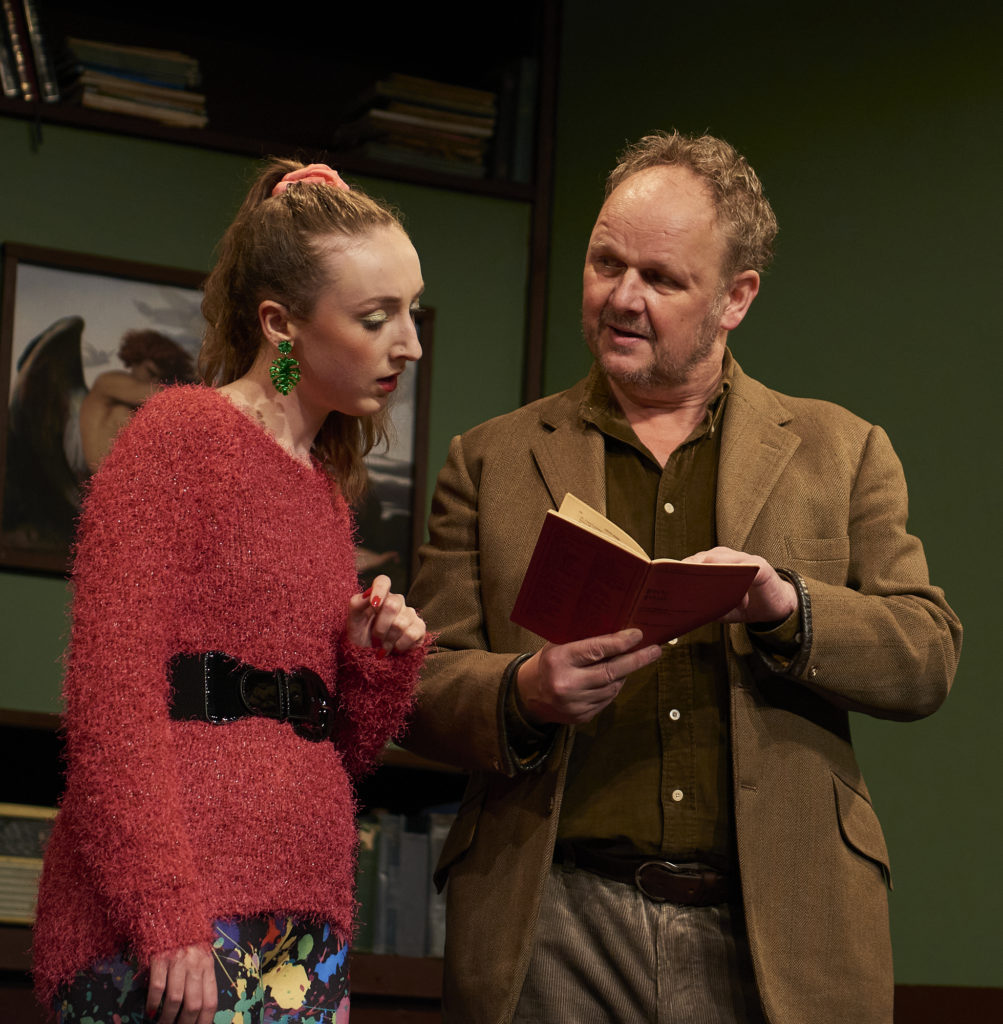
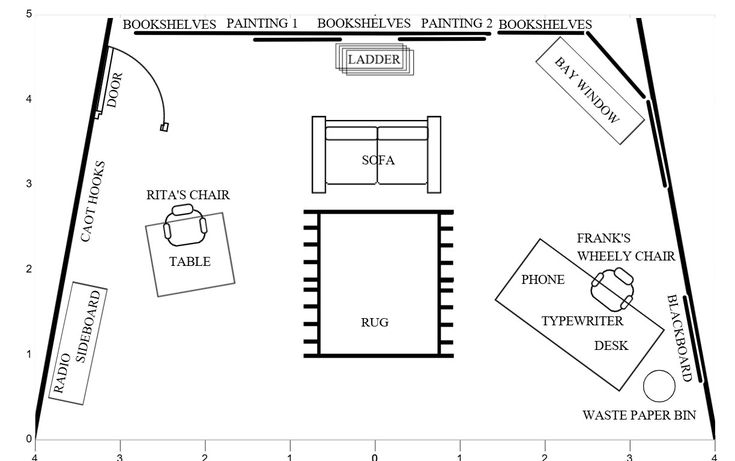
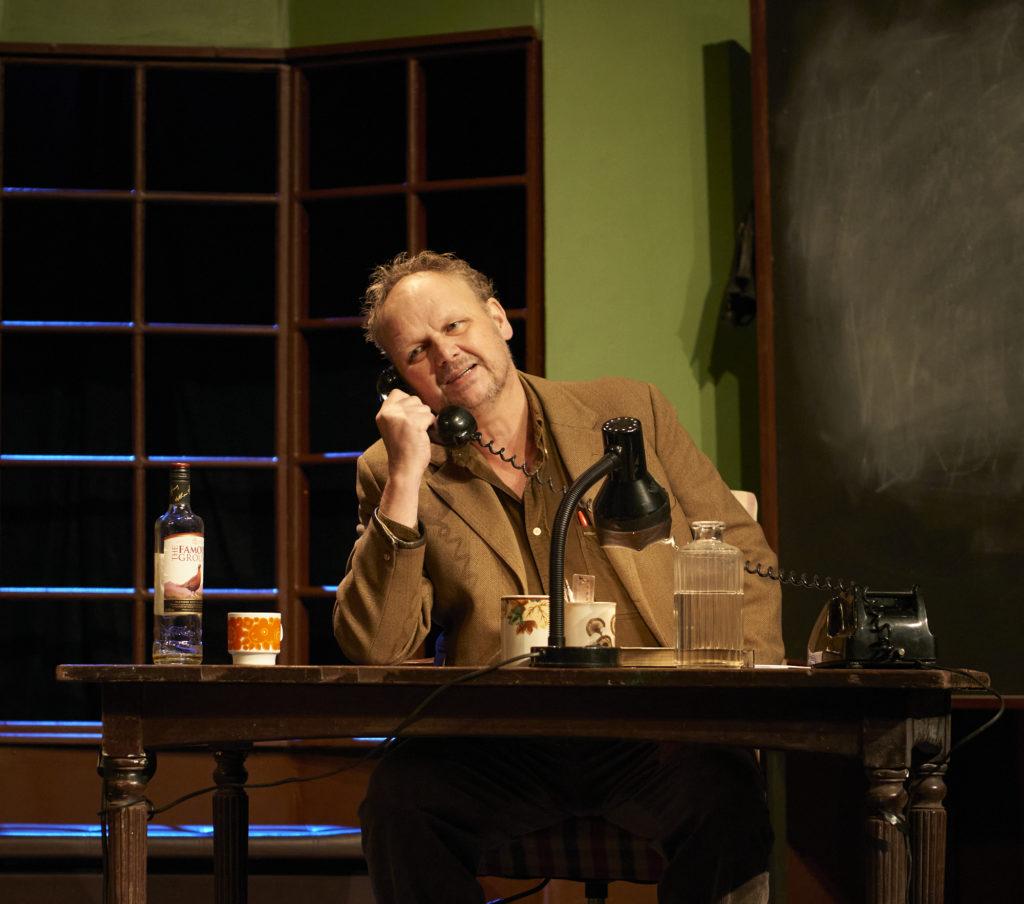
We had a modest budget for this production, and so I focused on creating the look of a book-lined study.
I felt it was important to get this right as to me it symbolised Frank’s world, that Rita enters and disrupts.
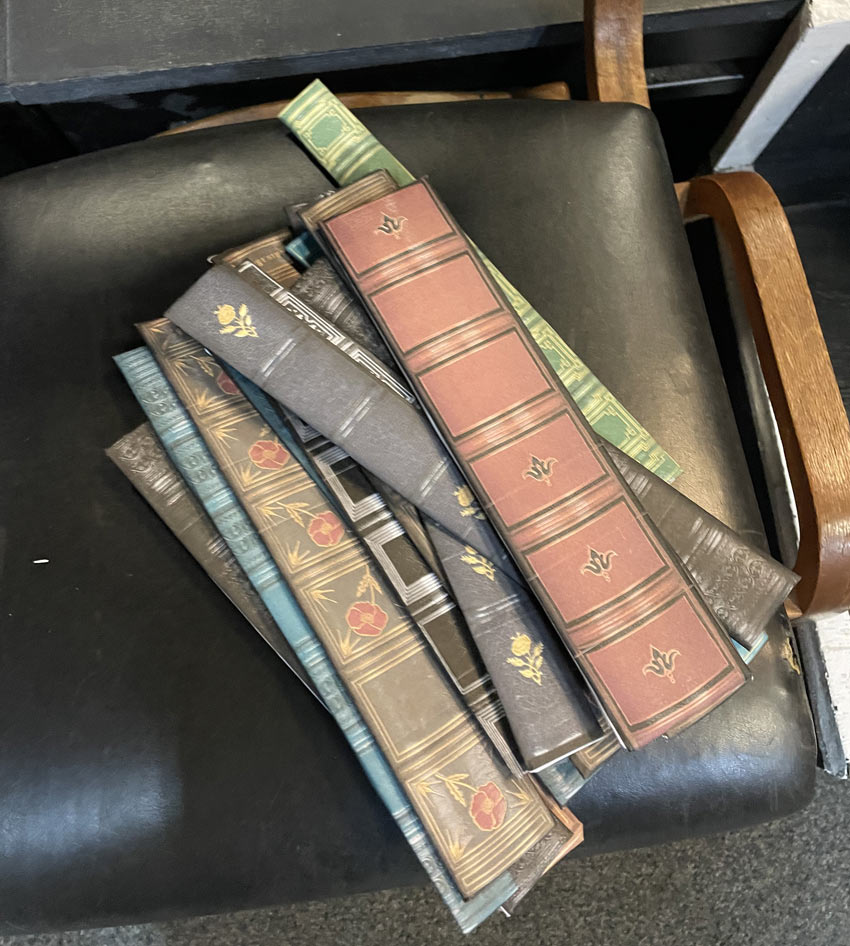
We created fake books that we stuck onto a background which looked very effective.

Set dressing
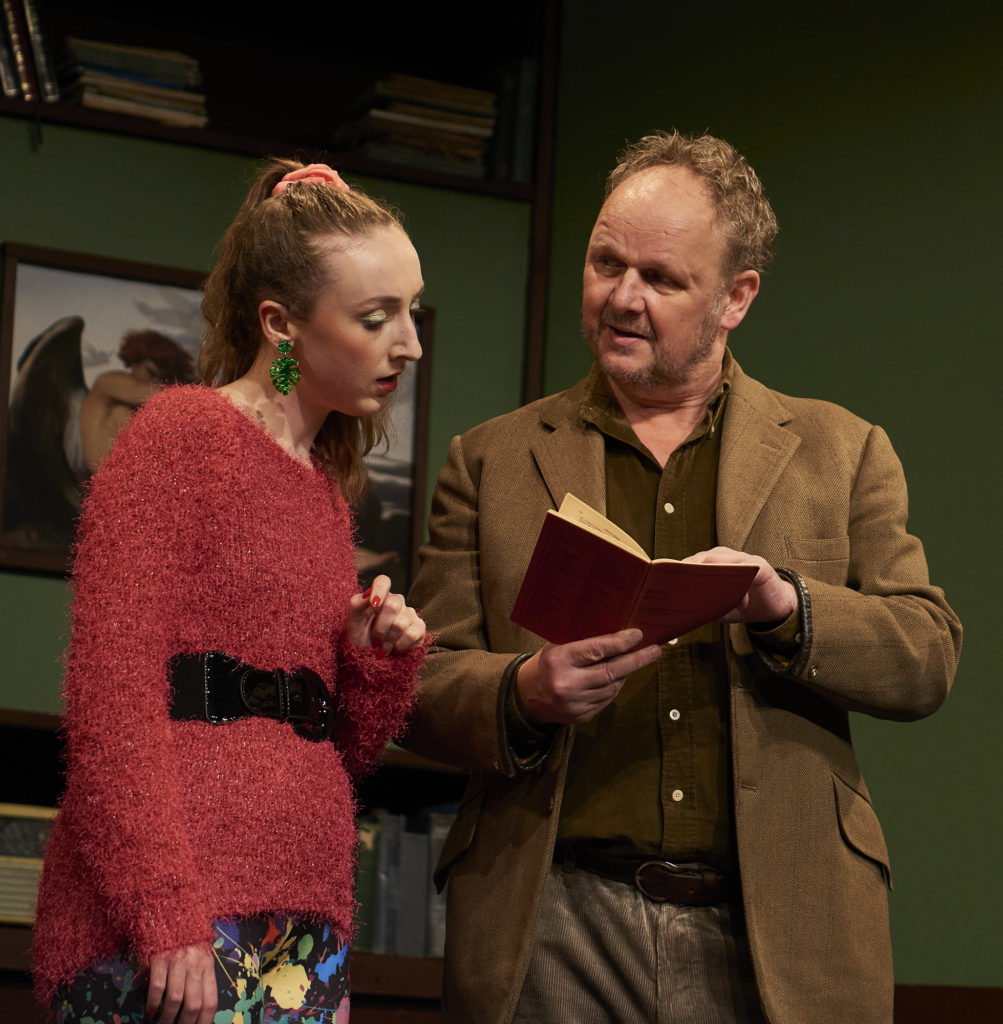
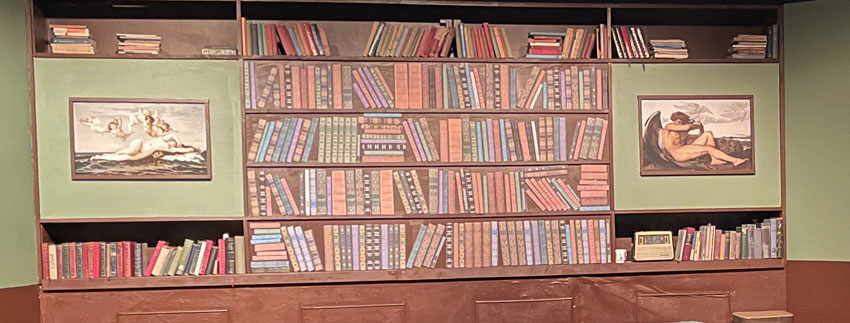
In a key part of the play Rita comments on a nude painting that is named in the script as The Birth of Venus by Andre Cabanel. I was keen to have this in a prominent position and found a partner piece by the same artist – The Fallen Angel.
I put these paintings at each side of the stage, to symbolise both sides of Frank’s nature – the innocent and the fallen spirit.

Quotations
One thing I’d always thought about play and film is that both Frank and Rita quote from books and plays that the audience might not be familiar with.
Willy Russell has said in a lot of his commentary that it didn’t matter whether people understood these references or not. Since both Rita and Frank use references that the other doesn’t understand, such as when Rita thinks the poet Yeats is a wine lodge. However, I have always felt like I was missing out by not knowing what they were specifically referring to. I thought it would be interesting to give context to the books they were discussing to help the audience understand part of what they were talking about.
The actor playing Frank recorded quotes from the book that highlighted what their conversation was referring to in each scene. I then added a relevant quote through the scene changes at the moments where they were relevant to what Frank and Rita were talking about.
I also added printed quotes throughout the theatre for the audience to read in the interval at their leisure.
Music
To place the piece firmly in the time and place it was set I wanted to introduce music. I added pre-show music from the year the play, to get people into the mood.
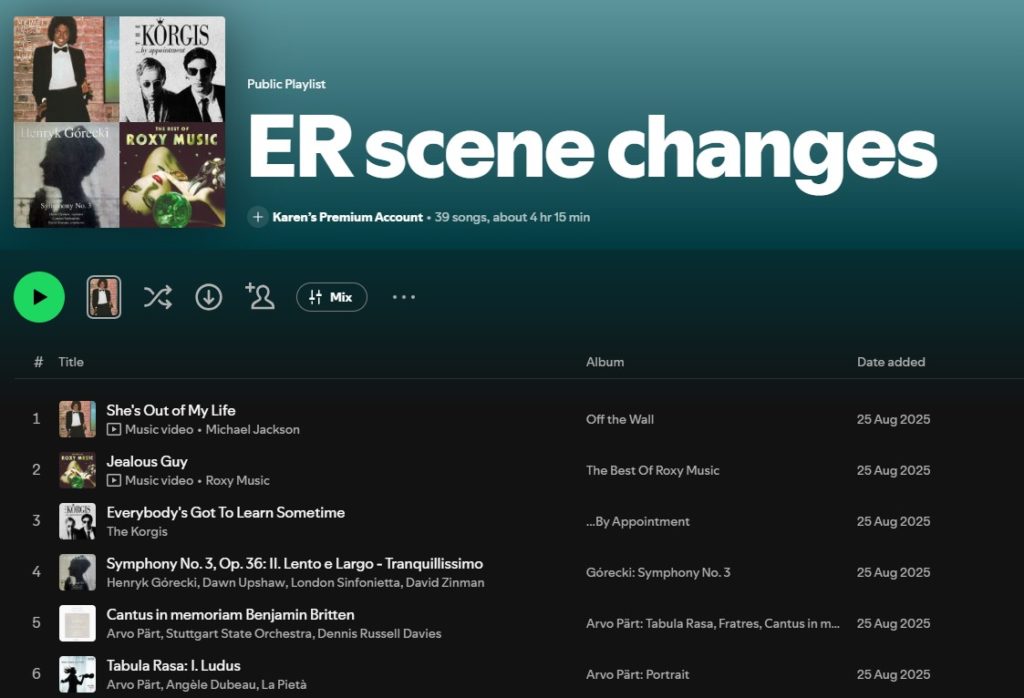
For the first half I chose education-related songs and ones that reflected Rita’s POV, who was the focus of Act 1. For Act 2 I focused more on Frank’s POV and decline, such as John Lennon’s Jealous Guy. Find my Educating Rita playlist on Spotify.
I also chose instrumental versions of UK music that was contemporary at the time and that coincided with the current emotional tone of the scene. I then played these behind the quotes, which not only sounded fantastic but meant we could incorporate lots of costume changes for Rita, while the quotes were entertaining the audience.
Costumes
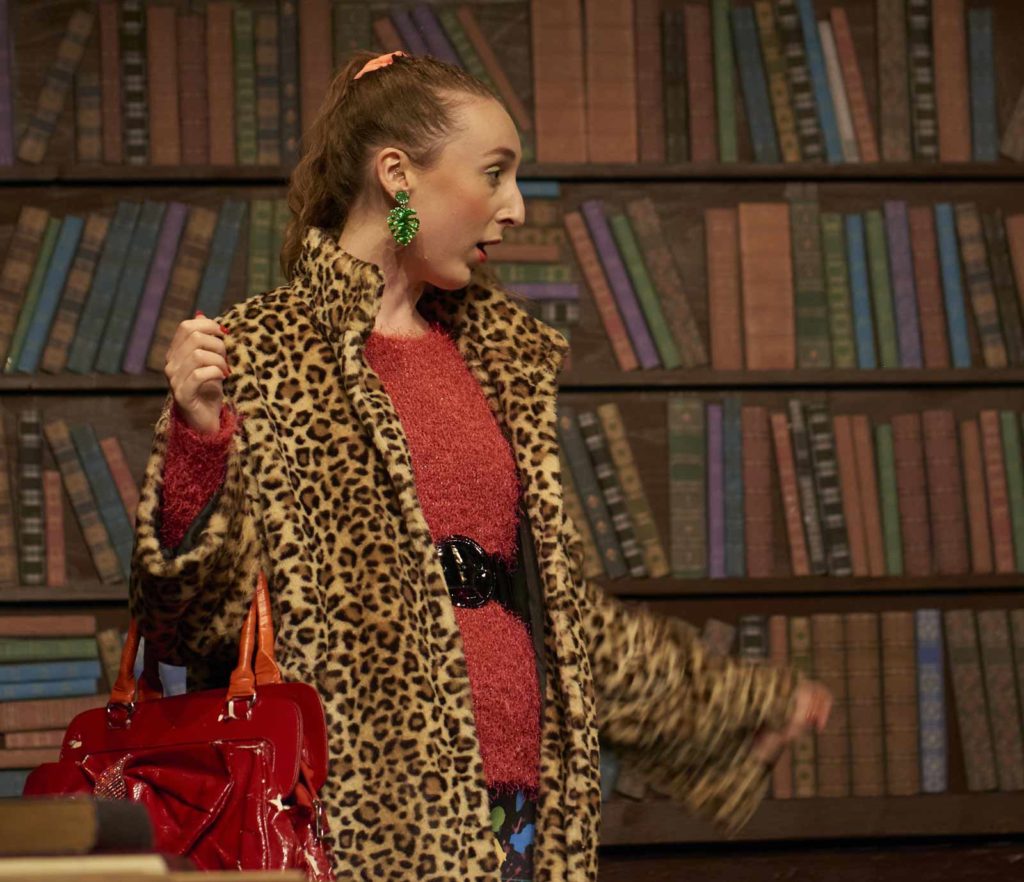
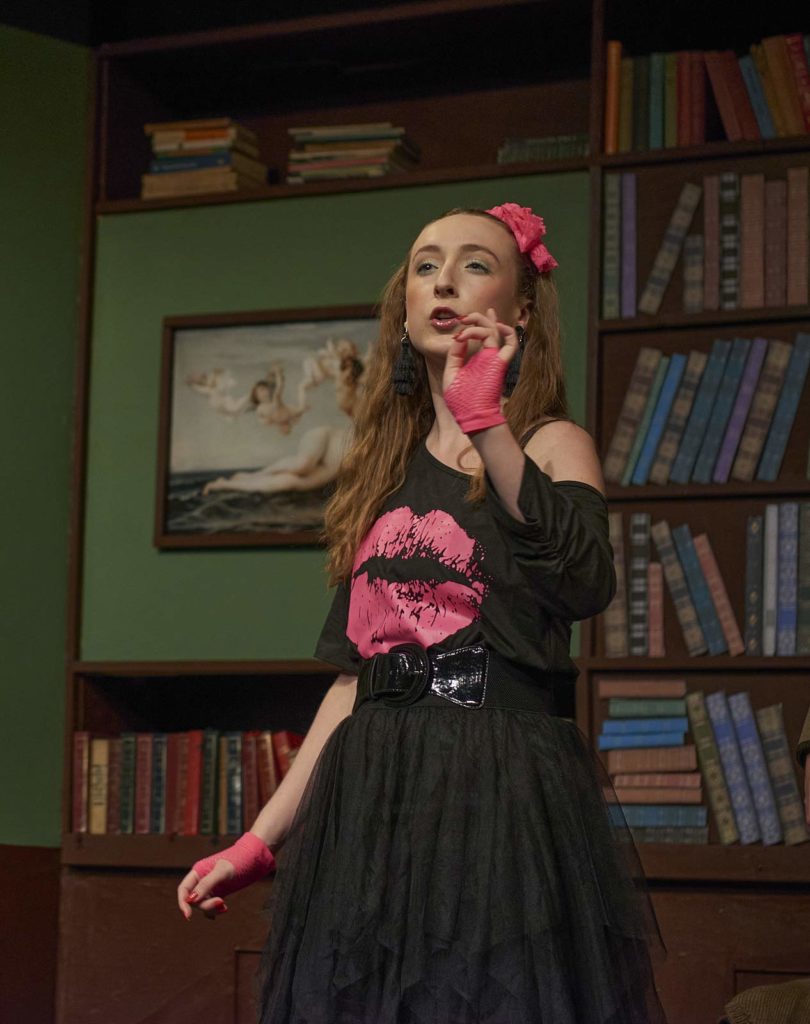
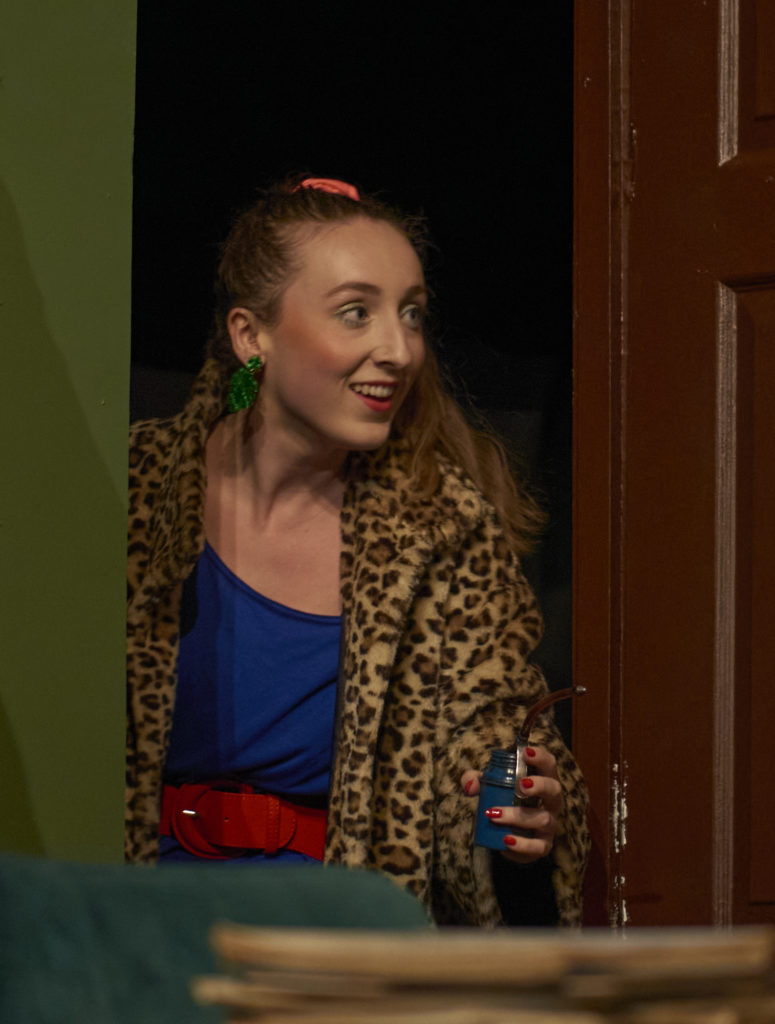
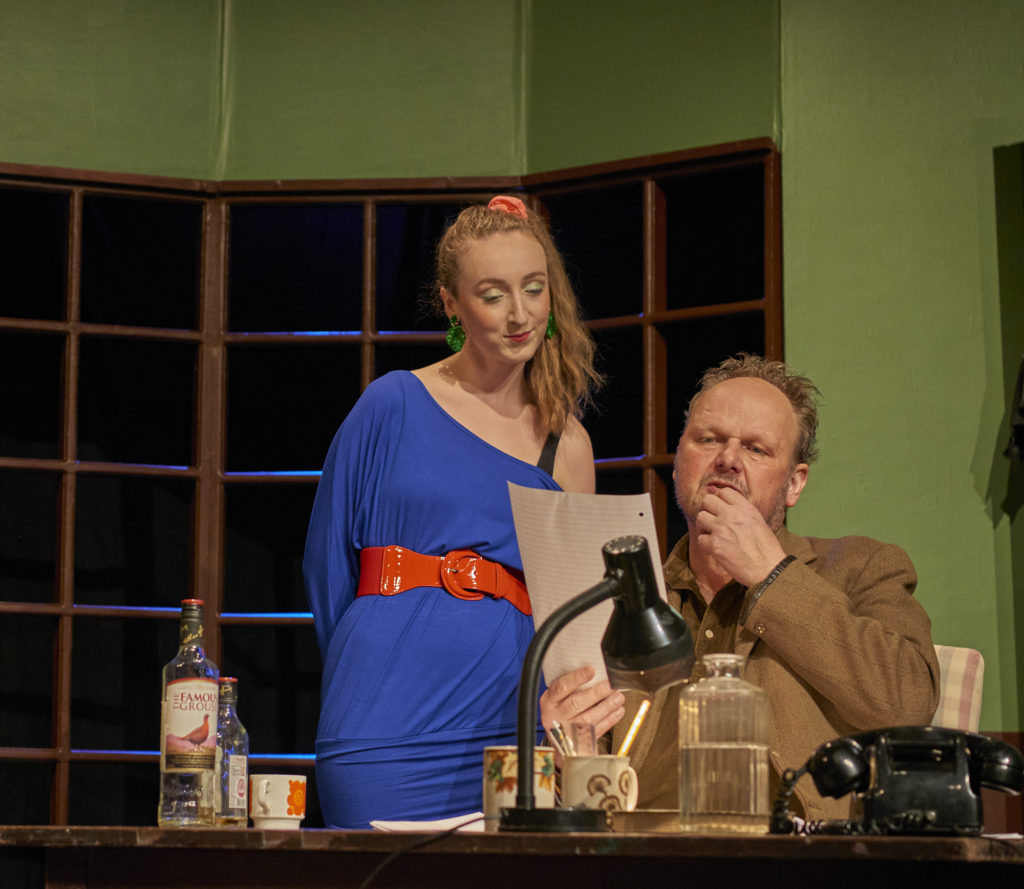
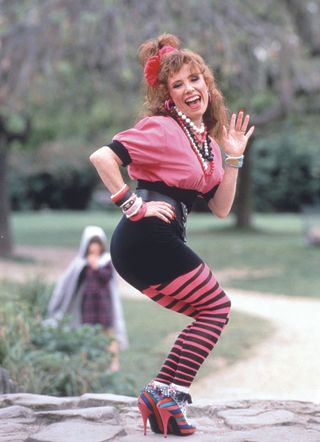
My inspiration for the costumes for Educating Rita was from my own memories of programmes from that era, such as the BBC TV show Bread and the Granada Television series Watching. There was also a bit of Madonna influence thrown in for the London-inspired version of Rita.
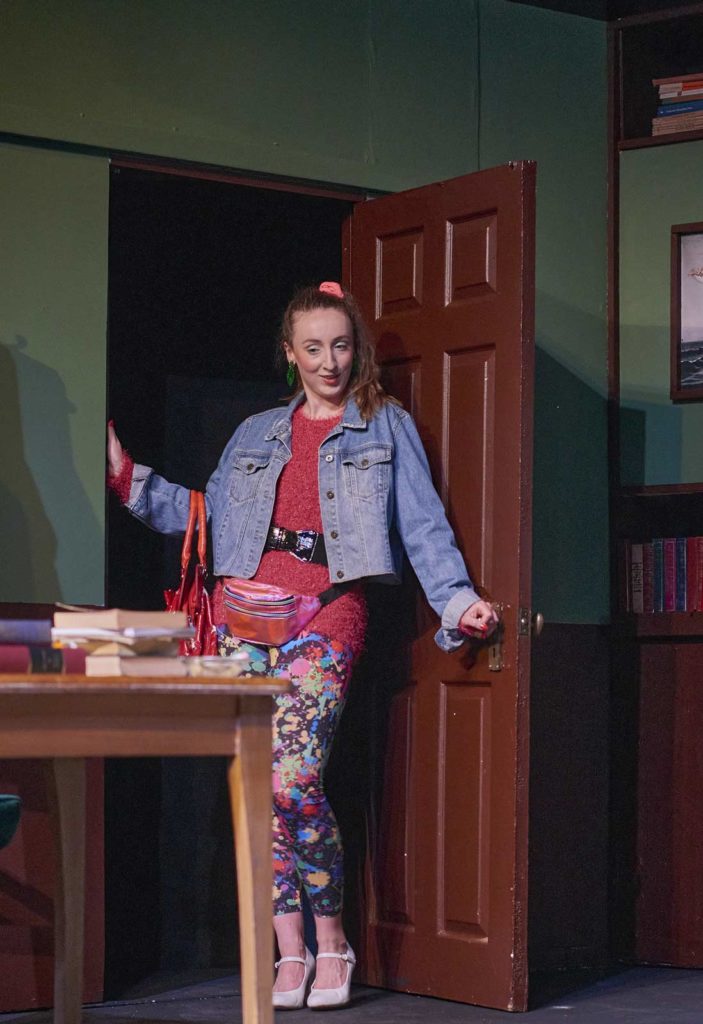
We split Rita’s transformation into different ‘Rita’s:
- Original Rita
- London Rita
- Posh Rita
- Final girl Rita
Each costume change reflected how Rita’s life and personality were changing as she experimented with different ways of speaking and living.
Rehearsals
One issue we had in particular with this play was the amount of lines that the actors had to learn. This was especially important because the dialogue tended to be quite long passages and monologues.
We had to really analyse the words and the meaning of each line, for the actors to, not only to remember them, but for us to get the full intonation right.
I’ve always wanted a chance to use the method of ‘Actioning’ and after the first rehearsal, it became clear that this was the ideal technique for this play. Actioning is analysing each line and the intended meaning behind it. I asked each actor to state the intention of each line before they said it, to encourage them to add range an nuance to their speech to ensure it stayed riveting.
My Assistant Director, Katie Smith, was invaluable during this process, especially in helping the actors retain their lines, conducting warmups, and helping with the overall staging and movement of the play.

Movement
As this is a play set in one room with the two actors talking to each other for most of the time, I added original movements to the script to help highlight the subject or point of the scene.
For example, in the first scene where Frank meets Rita I had the actress walk around the room opening books and closing them whilst Frank follows her around the room, closing them and tidying in the way behind her. My aim was to highlight the differences in their personalities and to show how she is disrupting his ordered but boring life.
Performance
The play was well received. The addition of quotes and music went down especially well. A number of quotes from the audience are included below.
A challenging role for both actors who delivered brilliantly – worthy of any West End stage. We were engaged throughout and the time flew by. Great staging and really enjoyed the spoken poetry lines between sets.
Jennifer, audience member
I love the film and have long-wanted to see the play, so I was excited to see this production. And it didn’t disappoint! As a two-hander it’s a challenging piece for the actors – both of them kept the pace superbly, and I was totally engaged throughout. Lots of genuinely funny moments, but the pathos was all there too. And the set was perfect.
Miranda, audience member
I had only seen the famous 1983 film ‘Educating Rita’ before and loved it, but this was the original 1980 play by Willy Russell, and I have to say, I think the play is better: A simple two-hander, set entirely in tutor Frank’s office. More intimate, more concentrated, more intense than the film.
Audience Club member
It was a challenging 2 person play to put on. There were some good lines and I liked the literature that joined the segments together the moving of time and Rita’s progress through the course.
Penny, Audience member
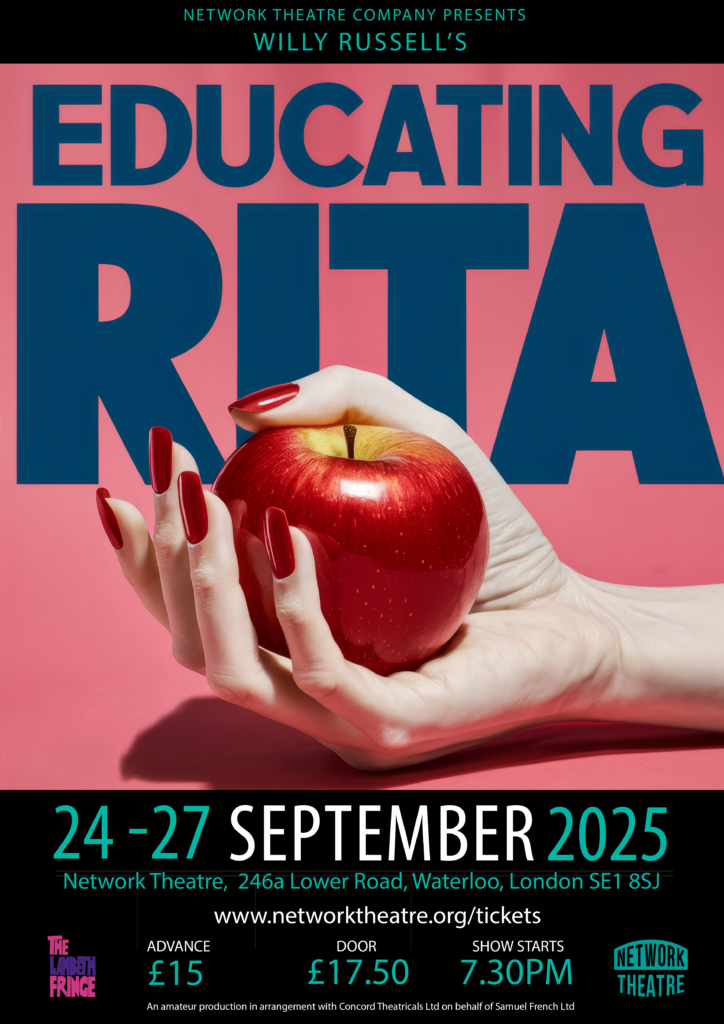
Educating Rita
Cast and Crew
Rita: Hettie Smith
Frank: Matthew Vickers
Director: Karen Sheard
Assistant Director: Katie Smith
Photographs taken by Paul-H-Lunnon
Photographs from Educating Rita, directed by Karen Sheard